
27 Important Questions to Ask an SEO Company Before Signing Any Contract
Hiring the right SEO partner can have a major impact on your website’s visibility and lead generation. In this guide, you’ll discover the most important questions to ask SEO company representatives before signing a contract, helping you compare agencies, avoid common mistakes, understand what to expect, and make a more informed decision for your business.

Deepak Sharma
SEO Consultant
June 06, 2027 | 6 min. read

Table of the content
- Introduction
- Common SEO Questions to Ask an SEO Agency Before Hiring Them
- 1. What Questions Should I Ask an SEO Company About Their Experience in My Industry?
- 2. Can You Provide Case Studies or Evidence of SEO Results for Your Clients?
- 3. What Should a Comprehensive SEO Report Include?
- 4. Which SEO Tools and Platforms Do You Use?
- 5. How Do You Define and Measure Success in SEO Campaigns?
- 6. How Long Does SEO Typically Take to Show Results?
- 7. How Do You Structure Pricing and Contracts for SEO Services?
- 8 What Is the Average Price for SEO Services, and How Should I Budget?
- 9. What Key Deliverables Will You Provide as a Strategic SEO Partner?
- 10. How Do I Choose the Right SEO Agency for My Business?
- 11. How Do I Hire an SEO Company the Right Way to Ensure a Good Fit?
- 12. How Should I Go About Hiring an SEO Marketing Company?
- 13. What Specific Questions Should I Ask a Local SEO Company?
- 14. What Should I Ask an SEO Management Company During Selection?
- 15. What Questions Should I Ask an SEO Consultant When Evaluating Them?
- 16. Does My Company Need SEO, and Why Might I Hire an SEO Strategist?
- 17. Will You Audit My Website and Check Its Potential Before Starting Work?
- 18. How Do I Choose the Right Technical SEO Agency or Expert?
- 19. How Will You Collaborate With Our Existing Marketing or Web Teams?
- 20. Who Will Manage Our Account, and How Will You Communicate Updates?
- 21. What Happens if I Terminate the Contract Early or if Results Don’t Meet Expectations?
- 22. What Red Flags Should I Watch for When Evaluating an SEO Agency?
- 23. What Will Be Included in Your Weekly or Monthly SEO Reports?
- 24. How Do You Adapt Your Strategy to Google’s Algorithm Updates?
- 25. How Do You Price SEO Services in a Contract, and What Billing Models Do You Use?
- 26. Which SEO Metrics Do You Track to Measure Progress?
- 27. Why Isn’t My Site Showing Up on Google, and What Will Your Agency Do to Fix It?
- Final Thoughts
Introduction
A lot of business owners hire an SEO company after one sales call, then a few months later they still don’t know what’s actually happening on their website. That’s why asking the right questions early matters.
Good SEO takes time, but a reliable agency should still explain their process clearly from the start. If answers feel vague or focused only on rankings, it’s worth being careful. From working with different businesses, I’ve seen the best results happen when expectations are clear before any work begins.
You should understand:
- how the SEO work will be done
- what progress will look like
- how results will be measured
- how often communication will happen
You’re not just paying for SEO services. You’re trusting someone with your website visibility and future enquiries.
Common SEO Questions to Ask an SEO Agency Before Hiring Them
I’ve seen businesses spend months paying agencies without receiving proper updates, strategy, or meaningful improvements. On the other hand, companies that asked detailed questions before signing usually avoided a lot of frustration later.
The right questions can help you avoid:
- unrealistic promises
- poor communication
- outdated SEO tactics
- long contracts with little value
A good SEO company should have no problem answering questions clearly and honestly before you commit. Here I am sharing common but important SEO questions that can help you hire the right SEO agency for your business.
1. What Questions Should I Ask an SEO Company About Their Experience in My Industry?
SEO works differently for every type of business. A local plumber, an online store, and a law firm all compete differently on Google.
One important question to ask is whether the agency has worked with similar businesses before. They don’t need to specialize only in your industry, but they should understand how your customers search and make decisions. Customer behavior, market demand, competitor analysis, and client goals matter before creating a custom plan for a business.
Throughout my professional journey, I have realized, local businesses often depend heavily on reviews, trust, and local visibility, while ecommerce sites usually need stronger product and category optimization. A generic SEO plan rarely works well.
Some useful questions to ask:
- Have you worked with similar businesses before?
- What SEO challenges do you usually see in this industry?
- What would you focus on first?
- How do you measure success?
Listen carefully to how they answer. A good SEO company should explain things clearly using real examples, not vague promises or generic advice. Traffic alone also isn’t enough. What matters is whether the right visitors turn into enquiries and customers.
2. Can You Provide Case Studies or Evidence of SEO Results for Your Clients?
Any SEO agency can make big promises. What matters is whether they can show real results behind those claims.
Good SEO case studies usually explain:
- what problems the client had
- what work was done
- how long it took
- what improvements happened over time
From working with different businesses, I’ve seen that real SEO growth is usually steady, not instant.
A reliable agency should be able to show things like:
- more enquiries or leads
- better local visibility
- traffic growth and improve website Authority
- keyword improvements over several months
Be careful with agencies that only show rankings for easy keywords or vague screenshots without context. Rankings alone don’t always mean the business is getting more customers.
The most useful SEO results are the ones tied to real business impact, like more calls, quote requests, or better quality traffic. SEO takes time with the right strategy and consistent effort, but monitor the milestones that the company discussed with you before starting the project.
3. What Should a Comprehensive SEO Report Include?
A good SEO report should clearly explain what’s happening on your website without confusing technical language. Many businesses receive reports full of graphs but very little real explanation. After reading them, they still don’t know if progress is being made.
A useful report should show:
- what work was completed
- what improved
- what still needs attention
- what the next priorities are
From my experience, the best reports focus on business results, not just data.
Important things to track include:
- organic traffic
- enquiries from search
- keyword visibility
- local search performance
- technical issues affecting rankings
You should also expect clear commentary, not just automated screenshots. If traffic drops or leads slow down, the agency should explain why and what they plan to do next. Good reporting creates transparency and helps you understand whether the SEO strategy is moving in the right direction.
4. Which SEO Tools and Platforms Do You Use?
Most SEO agencies use a mix of tools depending on the work being done. Some are better for keyword research, while others help with technical audits or tracking performance.
Common tools include:
- Google Search Console
- Google Analytics
- Ahrefs
- SEMrush
- Screaming Frog
But in my experience, tools alone don’t improve rankings. What matters is how the agency uses the data. I also see that different SEO tools give different results, so choose one trustworthy tool from the start and use it throughout the project. I recommend Ahrefs or SEMrush, as both are good for tracking metrics.
I’ve seen businesses pay for expensive SEO software while basic website issues were ignored. On the other hand, simple improvements done consistently often produce better results.
Some good questions to ask are:
- Which tools do you use regularly?
- How do they help your strategy?
- How do you track SEO progress?
- Will I receive clear reporting?
A reliable agency should explain everything in simple business language, not hide behind technical jargon. Try to obtain daily, weekly, and monthly SEO reports from the company. These reports help you track key metrics and ensure consistent progress throughout the entire project.
5. How Do You Define and Measure Success in SEO Campaigns?
A lot of businesses judge SEO only by rankings, but rankings alone don’t always bring enquiries or sales. Good SEO should support real business goals, whether that’s more calls, bookings, or qualified traffic from the right locations. From working with different businesses, I’ve found that reliable SEO campaigns usually track:
- organic traffic
- leads from search
- keyword visibility
- local search performance
- engagement on key pages
Context matters too. I’ve seen websites gain traffic that never converted, while smaller traffic increases sometimes produced far better leads. A good SEO agency should clearly explain:
- what they’re tracking
- why it matters
- how success connects to your business goals
If the conversation focuses only on “getting number one rankings,” that’s usually a red flag.
6. How Long Does SEO Typically Take to Show Results?
SEO takes time because Google needs to crawl your site, process changes, and build trust over time. In my experience, some improvements can appear within the first few months, especially after fixing technical issues or improving weak pages. More competitive industries usually take longer. For most businesses:
- early progress often happens within 3 to 6 months
- stronger growth usually takes 6 to 12 months
There are several SEO factors that affect a website’s performance. The timeline depends on things like:
- competition
- website quality
- content
- backlinks
- local or national targeting
Be careful with agencies promising instant results. Good SEO is usually steady, long-term work rather than quick ranking spikes that disappear later. A trustworthy agency should set realistic expectations from the beginning, not unrealistic promises just to win the contract.
📊 27% of SEO clients leave an agency within the first six months because of a lack of transparent reporting.
Why it matters:
One of the most common frustrations business owners have with SEO agencies is not knowing what is being done, what progress is being made, or whether the investment is working. That’s why questions about reporting, communication, and KPIs are some of the most important ones to ask before signing a contract.
Source: (WifiTalents)
7. How Do You Structure Pricing and Contracts for SEO Services?
SEO pricing varies between agencies, so it’s important to understand exactly what you’re paying for before signing a contract. In my experience, problems usually start when agreements are unclear. Businesses pay monthly fees without really knowing what work is being done.
Some important questions to ask are:
- What’s included each month?
- Are there minimum contract terms?
- How does cancellation work?
- Are content updates and technical fixes included?
- How will progress be reviewed?
Large SEO companies tend to have higher rates, whereas smaller SEO agencies charge less. It does not matter which is “better”; the best choice is the one that thoroughly understands your business, your goals, and the experience within the industry. A good SEO contract should feel clear and transparent, not complicated. If you have a limited budget, you can hire a freelancer remotely who possesses significant experience.
I’ve seen businesses locked into long agreements with very little real SEO work happening. Clear deliverables and honest communication usually lead to much better working relationships. When discussing SEO pricing, focus less on finding the cheapest option and more on understanding the actual strategy and work involved.
8 What Is the Average Price for SEO Services, and How Should I Budget?
SEO costs depend on your business type, competition, and goals. A small local business will need a very different strategy from a large ecommerce brand.
In the US and UK, many businesses invest anywhere from a few hundred to several thousand dollars or pounds per month depending on:
- competition
- website size
- content needs
- technical issues
- local or national targeting
From what I’ve seen, very cheap SEO services often rely on automated work, weak content, or low-quality backlinks. That doesn’t mean expensive agencies are always better either.
A realistic SEO budget should match the level of competition in your market and the amount of work needed to improve visibility properly. It is often observed that small businesses have limited budgets; therefore, they hire experienced freelancers rather than agencies. Companies offer various SEO packages, making it easy for businesses to choose the package best suited to their needs.
Before agreeing to pricing, make sure you understand:
- what work will happen each month
- who will handle the work
- how progress will be measured
- whether the strategy fits your business goals
A reliable agency should discuss pricing honestly instead of pushing oversized packages you may not need.
9. What Key Deliverables Will You Provide as a Strategic SEO Partner?
One of the best questions to ask an SEO agency is what work they’ll actually deliver each month. A good SEO partner should provide more than rankings reports. There should be ongoing work focused on improving your website and generating better enquiries.
Common SEO deliverables may include:
- technical audits
- keyword research
- on-page optimisation
- content recommendations
- local SEO improvements
- reporting and strategy reviews
From my experience, the best SEO partnerships are transparent. The agency explains what they’re doing, why it matters, and how it supports long-term growth. Sharing weekly and monthly progress reports is a good practice for tracking SEO growth.
I’ve seen some businesses improve quickly after fixing technical issues, while others saw bigger gains from improving weak service pages. That’s why SEO work should match real business priorities, not just follow a generic checklist.
A reliable agency should also review and adjust strategy regularly as your website and competition change.
10. How Do I Choose the Right SEO Agency for My Business?
Most SEO agencies sound similar at first, which is why asking detailed questions matters. In my experience, the best agencies focus on understanding your business first, not pushing a standard package immediately.
📊 76% of businesses waste their first year with an SEO agency due to misaligned expectations.
Why it matters:
Many SEO relationships fail because businesses don’t fully understand what the agency will deliver, how success will be measured, or how long results should realistically take. Asking the right questions before signing a contract helps avoid these expectation gaps from the start.
Source: SEOPlus+ Agency Relationship Study (2025)
A good SEO company should:
- communicate clearly
- explain things simply
- set realistic expectations
- show evidence of past work
- understand your business goals
Pay attention to how they speak during early conversations. Are they listening properly, or just trying to sell quickly? I’ve seen smaller agencies deliver far better results than larger companies simply because the strategy was more thoughtful and personalized.
I also have observed that progress tends to be slow during the initial few months. This does not imply that the company is a poor fit for you. This occurs because resolving technical issues and optimizing website content takes time; consequently, businesses perceive the progress as slow, but SEO results begin to become visible after 3 to 6 months.
When choosing an SEO agency, focus on:
- transparency
- communication
- realistic timelines
- clear reporting
- genuine understanding of your industry
You should leave the conversation feeling informed and confident, not confused.
11. How Do I Hire an SEO Company the Right Way to Ensure a Good Fit?
Hiring an SEO company is about more than technical work. You’re choosing a long-term partner, so communication and trust matter a lot. Do not look at how much experience the company has; instead, look at how well the company understands your business and whether it has previously worked within your specific niche.
Before signing anything, have a clear discussion about:
- goals
- timelines
- reporting
- communication
- responsibilities on both sides
From my experience, most problems happen when expectations aren’t clear from the beginning. You should feel comfortable asking questions and getting straightforward answers. If an agency avoids specifics or hides behind technical language, that’s usually a warning sign. Before hiring any agency, analyzing the company’s case studies would be a positive step for you.
It’s also worth asking:
- who will actually do the work
- whether tasks are outsourced
- how strategy decisions are made
- how often priorities are reviewed
Good SEO partnerships work best when both sides clearly understand the direction.
12. How Should I Go About Hiring an SEO Marketing Company?
When hiring an SEO marketing company, focus less on sales promises and more on how the agency actually approaches strategy. A good agency should clearly explain:
- how they prioritize work
- how they measure success
- how they communicate progress
I have observed that when businesses compare a few agencies instead of accepting the first offer in haste, they generally make better decisions. Some useful things to review include:
- client examples
- reporting samples
- contract flexibility
- local SEO experience
- content strategy
I’ve also seen businesses choose agencies based only on low pricing, then realize most of the work was automated or very limited. A reliable SEO company should feel like a strategic partner, not just a monthly service provider. They should communicate clearly, adapt when needed, and focus on long-term business growth rather than quick promises.
13. What Specific Questions Should I Ask a Local SEO Company?
Local SEO works differently because it focuses on visibility in specific areas, not nationwide traffic. From my experience, some agencies understand general SEO but struggle with things like Google Maps rankings, local search intent, and Google Business Profile optimization.
Instead of only asking about rankings, ask:
- How do you improve Google Maps visibility?
- How do you handle local listings and citations?
- How important are reviews for local SEO?
- How do you target nearby service areas?
- How do you target multiple locations simultaneously?
Their answers will quickly show whether they understand local SEO properly. I’ve seen businesses rank well overall but still miss enquiries because they weren’t visible in the locations that mattered most.
14. What Should I Ask an SEO Management Company During Selection?
When choosing an SEO management company, focus on how they manage work behind the scenes, not just sales presentations. Large businesses often have multiple websites or massive sites comprising thousands of pages. Managing them effectively requires a dedicated SEO team capable of handling on-page, off-page, and technical SEO. For example, Amazon is an e-commerce site, and managing a website of such scale requires a full SEO team.
Useful questions include:
- Who will manage my account?
- How often will strategy be reviewed?
- What happens if results slow down?
- How do you prioritize tasks?
In my experience, communication is one of the biggest factors in a successful SEO partnership. Even strong technical work becomes frustrating if updates are unclear or inconsistent. A good agency should also adapt strategy over time instead of using the same monthly plan for every client.
| Question to Ask | Good Sign ✅ | Warning Sign 🚩 |
|---|---|---|
| Can you show real client results? | Provides case studies with context and timelines. | Makes claims but cannot provide evidence. |
| How do you measure SEO success? | Focuses on leads, enquiries, visibility, and business goals. | Talks only about rankings. |
| How long will SEO take? | Sets realistic expectations and explains the process. | Promises fast or guaranteed results. |
| What will be included each month? | Clear deliverables, reporting, and ongoing work. | Provides vague answers about SEO activities. |
| How do you build backlinks? | Uses quality-focused, ethical link-building methods. | Avoids explaining the process. |
| Will I receive regular reports? | Provides transparent reporting with explanations. | Sends automated reports with little insight. |
| Who will manage my account? | Dedicated contact and clear communication process. | Unclear ownership or frequent handoffs. |
| What happens if I cancel? | Fair contract terms with clear expectations. | Hidden fees or restrictive cancellation terms. |
| Will you review my website before quoting? | Performs an audit or discovery process first. | Provides pricing without reviewing the website. |
| Can you guarantee rankings? | Explains why rankings cannot be guaranteed. | Promises #1 rankings on Google. |
From my experience, websites improve fastest when the agency focuses on fixing the right problems in the right order instead of using random SEO tactics. Most importantly, they should explain the issues clearly and build a strategy around your actual business, not a generic SEO template.
15. What Questions Should I Ask an SEO Consultant When Evaluating Them?
Hiring an SEO consultant is more personal because you’re usually working directly with the person handling strategy. One of the best things to evaluate is how they think about problems.
Good questions to ask include:
- What would you improve first on my website?
- What SEO issues stand out immediately?
- What are competitors doing better?
- What would you prioritize in the first few months?
From my experience, strong consultants usually speak honestly about priorities and limitations instead of promising quick fixes. Pay attention to whether they ask thoughtful questions about your business too. That’s often a sign they’re building a real strategy rather than following a generic checklist.
16. Does My Company Need SEO, and Why Might I Hire an SEO Strategist?
Not every business needs aggressive SEO campaigns, but most companies do need some level of search visibility today. If potential customers are searching for your services online and competitors are appearing instead of you, SEO becomes difficult to ignore.
The bigger question is usually not “Do I need SEO?” but:
“Am I currently visible when people are actively looking for what I offer?”
I’ve spoken with business owners who assumed referrals alone would always sustain growth. Then competition increased, search habits changed, or enquiries slowed down unexpectedly. That’s often when SEO becomes more important.
An SEO strategist helps look beyond rankings alone. The role is usually about identifying:
- where visibility is being lost
- what opportunities competitors are capturing
- what improvements could increase enquiries
- how your website supports business goals
In many cases, the issue isn’t a lack of traffic. It’s poor targeting, weak service pages, technical problems, or unclear messaging.
From my experience, businesses benefit most from SEO strategy when:
- their website gets traffic but few enquiries
- competitors dominate search results
- they rely too heavily on paid ads
- local visibility is weak
- growth has stalled
A good SEO strategist should help connect search visibility with actual business outcomes rather than chasing rankings for the sake of it.
17. Will You Audit My Website and Check Its Potential Before Starting Work?
A proper SEO audit should always happen before any long-term work begins. Without reviewing the website first, it’s difficult to understand what hurting performance is or where the biggest opportunities are.
While working with numerous clients, I have observed that many websites appear fine on the surface, yet they harbor certain flaws that impact their visibility, whether these are technical issues, weak content, or a poorly structured site architecture.
A useful SEO audit should review:
- technical health
- content quality
- keyword targeting
- mobile usability
- internal linking
- local SEO signals
More importantly, the agency should explain the findings clearly in plain language. Business owners don’t need complicated reports. They need to understand what matters most, what should be fixed first, and what impact those changes may have.
18. How Do I Choose the Right Technical SEO Agency or Expert?
Technical SEO is really about making sure your website works properly for users and search engines. A good technical SEO expert should explain problems clearly instead of hiding behind complicated jargon. For example, they should explain how technical issues affect visibility, speed, or user experience in practical terms.
Some useful questions to ask are:
- How do you identify technical SEO issues?
- What tools do you use?
- Which problems do you commonly find?
- How you priorities do fixes?
- Do you help implement changes?
From my experience, strong technical SEO experts are usually practical and methodical. They focus on solving real website problems, not producing long reports filled with technical language.
19. How Will You Collaborate With Our Existing Marketing or Web Teams?
SEO works best when it connects properly with your existing marketing, content, or web teams. From my experience, projects often slow down when agencies work separately without clear communication. Technical fixes get delayed and priorities become unclear.
A good SEO agency should explain:
- how they communicate with other teams
- who handles implementation
- how recommendations are shared
- how priorities are managed
It’s usually a good sign when an agency asks about your current workflow early on. That often shows they’re thinking about long-term collaboration rather than working in isolation.
20. Who Will Manage Our Account, and How Will You Communicate Updates?
A good agency should explain things clearly and keep you informed regularly. You should never feel unsure about what’s happening with your website. Before signing with an SEO agency, make sure you know who will actually manage your account day to day.
You should understand:
- who your main contact is
- how often updates happen
- how meetings are handled
- who answers technical questions
In my experience, communication quality has a huge impact on how businesses feel about SEO progress, especially during slower growth periods.
21. What Happens if I Terminate the Contract Early or if Results Don’t Meet Expectations?
Before signing any SEO contract, it’s important to understand:
- cancellation terms
- notice periods
- ownership of work completed
- whether any exit fees apply
I’ve seen businesses get stuck in long contracts without fully understanding the small details first. Good SEO does take time, but agreements should still feel fair and transparent. It’s also worth asking how the agency handles situations where results are slower than expected. A reliable company should review performance honestly, explain challenges clearly, and adjust strategy where needed.
No agency can guarantee exact rankings, but they should absolutely be accountable for the quality of work and communication they provide.
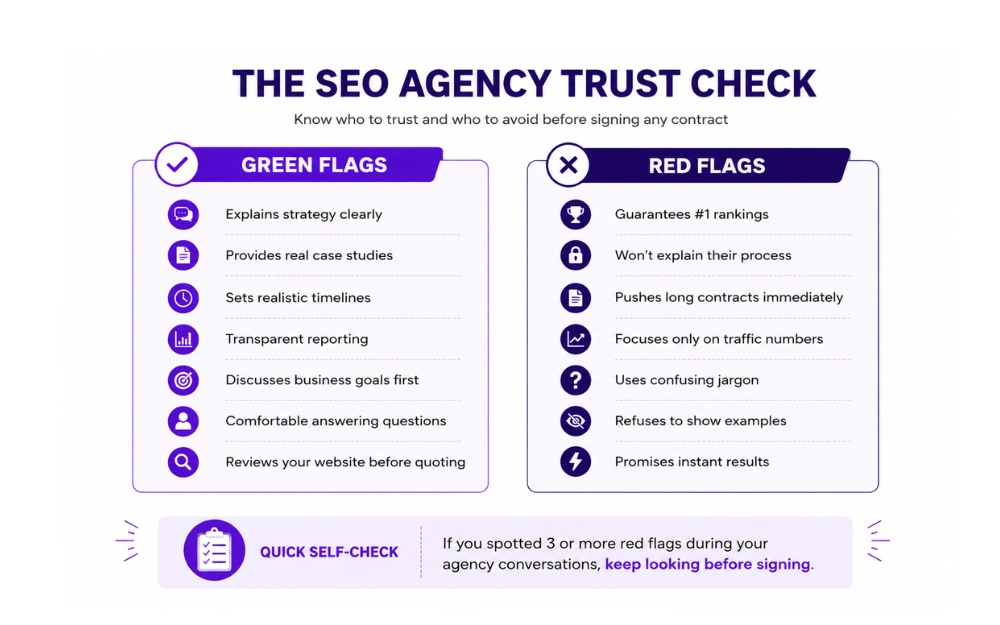
22. What Red Flags Should I Watch for When Evaluating an SEO Agency?
One of the biggest SEO red flags is unrealistic promises. If an agency guarantees fast first-page rankings, especially in competitive industries, I’d be cautious. Another warning sign is vague communication. A good agency should clearly explain:
- what work they’ll do
- how progress is measured
- why certain changes matter
Other common red flags include:
- very cheap pricing with unclear deliverables
- aggressive sales pressure
- generic audit reports
- poor transparency
- no interest in your business goals
I’ve also seen agencies focus heavily on rankings while ignoring whether the website is actually generating enquiries. A reliable SEO company usually sounds practical and realistic, not overly perfect or sales-driven.
23. What Will Be Included in Your Weekly or Monthly SEO Reports?
A good SEO report should help you understand whether your website is improving, not just show graphs and technical numbers. Personally, I think every report should answer:
After that, it’s less about quick fixes and more about overall improvement.
Most monthly SEO reports should include:
- traffic changes
- keyword visibility
- enquiries from search
- technical issues fixed
- work completed
- next priorities
The best reports combine data with clear explanations. You shouldn’t need SEO knowledge to understand what’s happening with your website.
24. How Do You Adapt Your Strategy to Google’s Algorithm Updates?
Google updates its algorithm regularly, which is why SEO strategies need to evolve over time. In my experience, websites built on strong fundamentals usually handle updates much better. That includes useful content, good user experience, fast performance, clear website structure and trustworthy backlinks.
Whenever a new update is released, it impacts the rankings and traffic of many websites. By adopting the right strategy and optimizing the website in accordance with Google’s updates, we can manage these effects. A good SEO agency should monitor:
- ranking changes
- traffic trends
- search console data
- competitor movement
More importantly, they should respond calmly and strategically instead of panicking every time rankings fluctuate. Strong SEO is usually about consistent long-term improvements, not chasing temporary shortcuts.
25. How Do You Price SEO Services in a Contract, and What Billing Models Do You Use?
SEO agencies use different pricing models, including:
- monthly retainers
- project-based pricing
- hourly consulting
- performance-based agreements
The pricing model itself matters less than the clarity behind it. A good SEO contract should clearly explain:
- what work is included
- how often work happens
- what support is provided
- how progress is tracked
From my experience, confusion usually starts when businesses don’t fully understand what they’re paying for. Before signing, ask:
- Are content costs included?
- How are technical fixes handled?
- Can the strategy change if priorities shift?
- How is work reported each month?
A reliable SEO agreement should feel straightforward and transparent from the beginning.
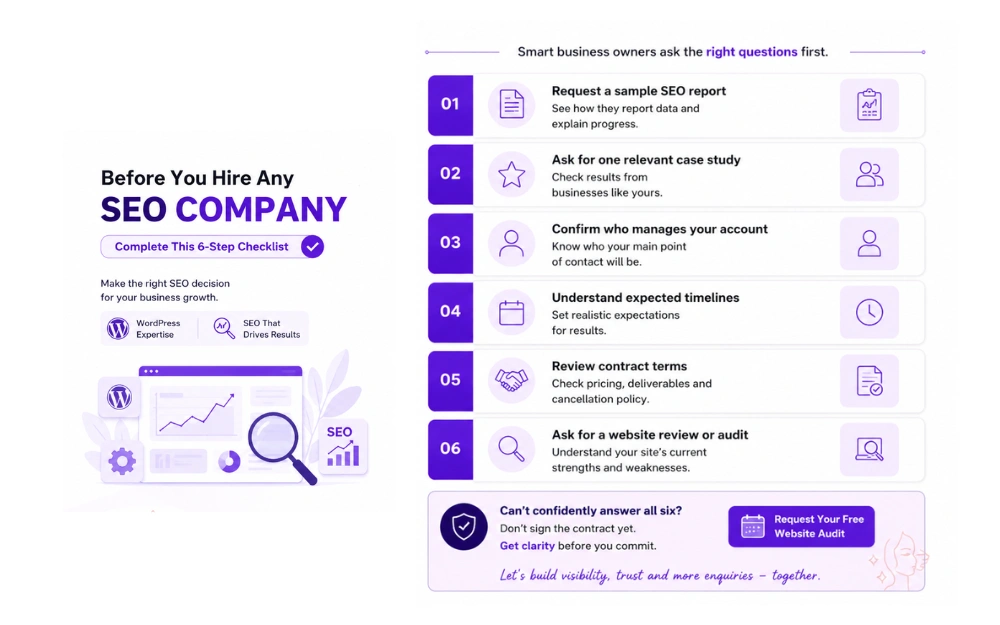
26. Which SEO Metrics Do You Track to Measure Progress?
Not every SEO metric actually reflects business growth. Traffic alone means very little if visitors never become enquiries or customers. In my experience, the most useful SEO metrics usually include:
- organic traffic quality
- leads or enquiries
- keyword visibility
- click-through rates
- local search performance
- technical website health
Different businesses will prioritize different metrics. A local service company may care more about calls and map visibility, while ecommerce businesses often focus more on sales and product traffic. A good SEO agency should explain:
- which metrics matter most
- how they track progress
- what realistic growth looks like
That’s far more useful than endless spreadsheets filled with rankings.
See What’s Holding Your Website Back
Get a clear review of issues affecting visibility and enquiries.
27. Why Isn’t My Site Showing Up on Google, and What Will Your Agency Do to Fix It?
There are many reasons a website may struggle on Google. Sometimes the issue is technical, while other times the content simply doesn’t match what people are searching for.
I’ve seen websites struggle because of:
- indexing problems
- weak content
- slow performance
- poor internal linking
- missing local signals
A good SEO agency should first review:
- whether Google can crawl the website properly
- what keywords the site currently ranks for
- technical issues affecting visibility
- how competitors are performing
From my experience, websites improve fastest when the agency focuses on fixing the right problems in the right order instead of using random SEO tactics. Most importantly, they should explain the issues clearly and build a strategy around your actual business, not a generic SEO template.
Final Thoughts
Choosing an SEO company is a decision that can have a long-term impact on your business, so it’s worth taking the time to ask the right questions before signing any contract. The best agencies won’t be the ones making the biggest promises. They’ll be the ones that communicate clearly, explain their strategy, set realistic expectations, and show genuine interest in helping your business grow.
Over the years, I’ve seen businesses waste thousands on SEO services that sounded impressive during the sales process but delivered very little value afterwards. In most cases, the warning signs were there from the beginning. The right questions simply weren’t asked.
Whether you’re comparing agencies, speaking with an SEO consultant, or reviewing a proposal, use the questions in this guide to make informed decisions and avoid costly mistakes.
SEO should never feel confusing or secretive. A good SEO partner should help you understand what’s being done, why it matters, and how it supports your business goals.
If you’re currently evaluating your options and want a second opinion on your website or SEO strategy, Digital Deep Tech is always happy to provide honest feedback and practical guidance based on your specific situation.
Deepak Sharma is the founder of Digital Deep Tech and an SEO consultant with more than 10 years of hands-on experience. He works closely with small business owners across the US and UK, helping them avoid common SEO mistakes, evaluate agencies more effectively, and build long-term strategies that support real business growth.
Recent Blogs
- 9 Reasons Your Website Isn’t Showing on Google ( How to Fix It Fast)
- How to Choose the Best Voice SEO Company in 2026?
- Mobile Website Optimization: Why Most Sites Fail on Mobile
- How to Find the Best SEO Company for Hotels (2026 Guide)
- Does SEO still work for small businesses in 2026?
- SEO for Fitness Businesses: How Gyms & Trainers Get Clients from Google