
Why SEO Traffic Doesn’t Turn Into Enquiries
If you’re wondering why my website traffic doesn’t turn into enquiries, this guide breaks it down in plain language. It explains what usually goes wrong after visitors land on your site and what small, practical changes can help turn traffic into real enquiries.

Priya Sharma
Content Writer
Jan 14, 2026 | 6 min. read
You’re doing the work. Your site is getting visitors from Google, but the phone doesn’t ring and the contact form stays quiet. This is one of the most common frustrations I hear. It’s also why many people start asking why websites fail to produce sales, even when traffic looks fine. In most cases, the issue isn’t effort or visibility. It’s what the visitor experiences once they arrive.
The Real Reason Traffic Isn’t Turning Into Leads
In many cases, the website is attracting visitors, just not the right ones. Google is doing its job by sending people your way, but those people may be early in their research or looking for something slightly different from what you offer. That’s usually where things start to break down.
I see this often when a site ranks for broad topics but doesn’t clearly spell out who it’s actually for. Someone lands on the page, scans it for a few seconds, and can’t tell if you solve their specific problem. They don’t dislike the site. They just don’t see a reason to get in touch.
This is also where how to get right website traffic matters. It’s not about more visitors. It’s about attracting people who already feel like you’re a good fit. When the message and the visitor’s intent don’t line up, traffic increases but enquiries don’t.
Most business owners assume that if people are arriving, the hard part is done. In reality, that’s only halfway. What comes next depends on clarity, relevance, and whether the site makes it easy for the right person to recognise themselves in what they’re reading.
Only about 2.35% of website visitors take an action like filling a form or booking a call, meaning roughly 97 out of 100 people leave without converting.
This shows that getting traffic is only the first step. The vast majority of visitors don’t become leads unless the site guides them clearly toward action.
Source: Website Conversion Rate Statistics
Mistakes That Stop Visitors From Enquiring
One of the biggest assumptions I see is that once traffic arrives, enquiries will follow on their own. Many owners believe the website will naturally do the job of converting your website traffic into sales without much guidance. Unfortunately, it rarely works that way.
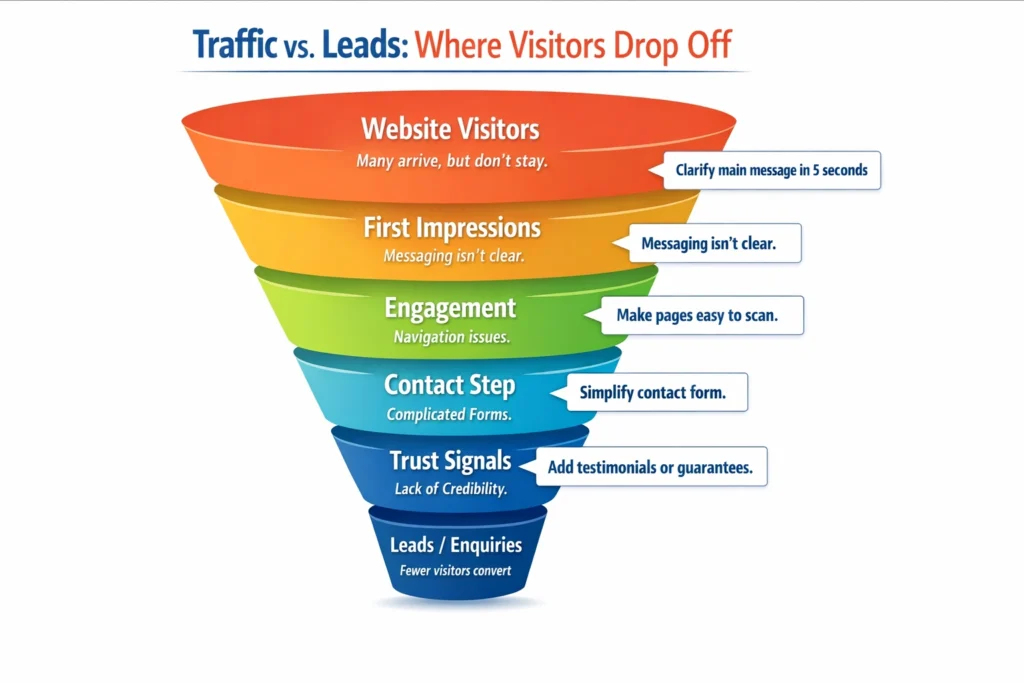
A common mistake is talking too much about the business and not enough about the visitor. Pages list services, credentials, and features, but they don’t explain how those things help someone with a real problem. Visitors end up unsure whether to take the next step.
Another issue is asking for too much, too soon. Long forms, vague contact buttons, or requests for detailed information can feel like a commitment. When someone is still deciding, that friction is often enough to stop them.
There’s also a tendency to keep adding more content instead of fixing what already exists. Traffic grows, but the core pages stay unclear. At that point, the site is busy but not effective. These small missteps add up and quietly block enquiries before they ever happen.
How to Make Your Website Convert
If you’re trying to figure out how to convert website traffic into leads, start with the basics most sites overlook. When someone lands on your page, they should quickly understand who you help, what problem you solve, and what to do next. If that isn’t clear within a few seconds, they’ll move on.
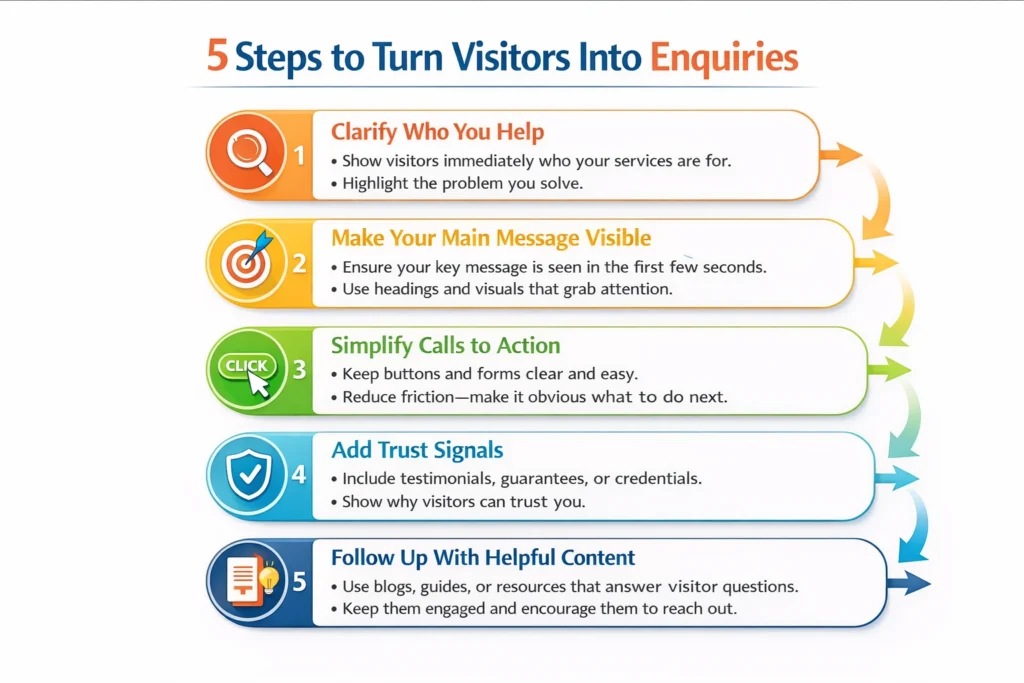
Your main pages should guide the visitor, not just inform them. Use simple language. Explain the problem you solve in the same words your clients use. Make the next step obvious, whether that’s a short contact form, a clear call to action, or an invitation to start a conversation without pressure.
Trust matters just as much as clarity. Real examples, brief explanations of how you work, and reassurance around what happens after someone gets in touch can remove hesitation. People don’t avoid enquiring because they’re not interested. They hesitate because they’re unsure.
This is how you start to convert website traffic into sales without chasing more visitors. When the right people feel understood and guided, enquiries happen naturally. The traffic you already have becomes far more valuable.
UI and UX (Website Structure Also Matters)
Another important factor is UI and UX. Your website should be designed for both your target audience and search engines. Speed matters too—pages need to load quickly on desktop and mobile because visitors usually spend only a few seconds deciding if they’ll stay. A clean layout and fast loading time make it easier for them to engage.
Sites that take over 3 seconds to load see much higher abandonment, with visitors rapidly leaving and conversions dropping sharply. Faster-loading sites keep more people engaged and reduce bounce rates.
If a site is slow or confusing, visitors leave before they even see your message. Fixing load time and clarity can prevent this early drop-off.
Source: Web Design Statistics 2026
Google also values EEAT, which means your website should not just show your services, but also demonstrate your experience, expertise, authority, and trustworthiness.
Real Example from a Client Project
A Salon service business I worked with was getting steady traffic every week, but enquiries were rare. On the surface, everything looked fine. Rankings were solid and visitors were spending time on the site. Still, nothing was coming through.
When we looked closer, the issue was clear. The homepage talked about the company, not the customer. The contact page felt formal and asked for too much information. Visitors had no clear reason to reach out at that moment.
Once the messaging and content were updated to focus on the client’s problem, and the contact step was simplified, things changed. This is often how to turn website traffic into sales—not by adding more pages or chasing more visitors, but by making it easy for the right person to say yes and start a conversation.
What we focused on
- Analyzed the website structure and user journey.
- Optimized content for both customers and Google.
- Simplified the CTA structure to make it clear and easy to use.
- Published regular blogs addressing the problems customers face.
Result
- Traffic remained stable, but sales improved.
- The website now looks professional and builds trust.
- Continued blog publishing helped improve search rankings.
Get clarity before you decide
If your site is attracting visitors but enquiries aren’t coming through, start by looking at the pages that matter most. Small changes in messaging, layout, or calls to action can make a big difference. Clear, simple steps help visitors understand why they should get in touch.
Check How Your Website Converts Today
Quickly see what stops visitors from turning into real enquiries.
I can take a quick look at your website and share clear feedback, sometimes through a short video so you can see exactly what I’m referring to. The goal isn’t to sell you anything. It’s to help you understand what’s really happening on your site and whether focusing on SEO makes sense for your situation right now.
Focusing on converting your website traffic into sales isn’t about adding more content or spending more on traffic. It’s about making it obvious and easy for the right people to take the next step. Review your key pages from a visitor’s perspective and remove anything that could cause hesitation. Even small adjustments can turn passive visitors into real enquiries.
FAQs
Why is my website getting traffic but no enquiries?
This happens more often than you think. Visitors arrive, but the page doesn’t clearly show them why they should contact you or how to take the next step. Simple things like unclear messaging, hidden contact options, or long forms can stop people from enquiring. Fixing these points can help convert visitors into leads.
Is SEO traffic low quality?
Usually, it’s not. Most of the traffic coming from search engines is fine—it’s real people looking for solutions. The problem is often how the website handles that traffic. If pages aren’t guiding visitors effectively, even good traffic won’t result in enquiries. Making small improvements can help turn visits into action.
Do I need more traffic or a better website?
In most cases, improving the website experience is faster and more effective than chasing extra traffic. Focusing on how to convert website traffic into leads ensures the visitors you already have are more likely to reach out. Sometimes a few simple adjustments can make a big difference.
Should I change my keywords?
Only if they’re completely off-target. Often, the issue isn’t keywords at all, but how the site communicates with visitors. When done right, even existing traffic can start converting. Learning how to turn website traffic into sales is about guiding visitors, not just chasing new ones.